The Dashboard Never Forgets: Who Really Owns Your Car's Location History
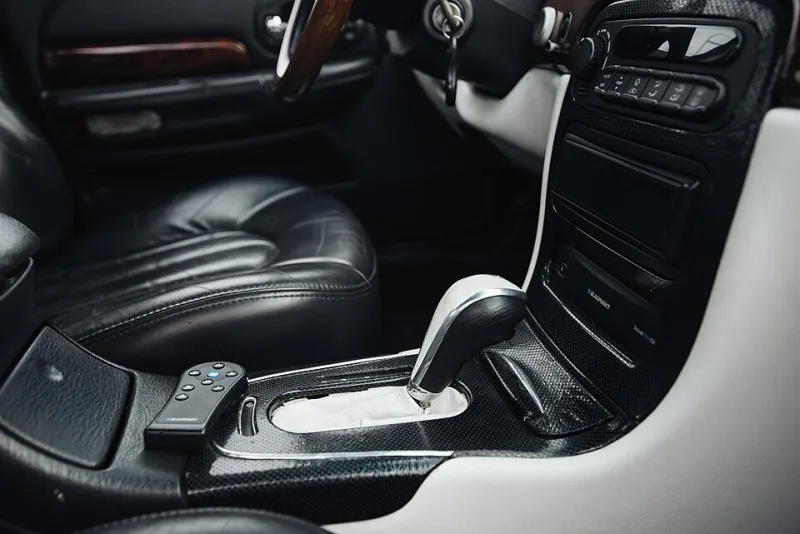
Photo: Shixart1985, CC BY 2.0, via Wikimedia Commons
Somewhere in a database right now, there is likely a record of the route you took to work last Tuesday — including the fact that you braked hard twice on the interstate and idled for six minutes in a parking lot. You didn't send it. Your car did.
Connected vehicles have quietly become one of the most prolific sources of personal location data in the American economy. And unlike your phone, which at least asks permission, most drivers never saw a meaningful choice about any of it.
What the Car Actually Records
The technical term is telematics, and the scope is broader than most owners assume. A late-model vehicle with an active data connection can log GPS position at regular intervals, speed and acceleration patterns, hard-braking events, seatbelt use, and — in cars equipped with driver-monitoring cameras — whether your eyes were on the road. Insurance-style 'driving scores' built from this data have become a product line in their own right.
The problem isn't that the car computes these things locally. It's that they leave the vehicle, and where they go next is governed by privacy policies few people read and fewer understand.
The Broker Economy
Automakers have repeatedly stated they don't sell personal data outright. But data has a way of traveling. Reporting and regulatory inquiries over the past two years have documented how driving-behavior data flowed through a chain of brokers to insurance analytics firms, sometimes via third-party apps that had permission to access vehicle data but no meaningful relationship with the driver.
The consequences landed on consumers directly. Drivers discovered their premiums had risen based on driving behavior they never knowingly shared. State insurance regulators began asking questions, and the Federal Trade Commission took action — including a 2024 enforcement matter against an automaker over the sharing of sensitive driving data with brokers without adequate consent, and a sweeping order restricting how that data could be monetized. Class-action settlements followed, with automakers agreeing to pay tens of millions and, in some cases, to stop sharing certain data with third parties altogether.
Reading the Fine Print
Compare automaker privacy policies and the differences are stark. Some manufacturers commit to not selling personal information and limit retention; others reserve broad rights to share data with 'service providers' and 'partners' — categories elastic enough to cover a lot of ground. A few now participate in independent privacy certifications; others offer nothing comparable. If you're shopping for a car in 2025, the privacy policy deserves the same attention as the fuel-economy sticker.
Is 'Privacy Mode' Possible?
Here is the frustrating answer: sometimes, partially, briefly.
Most connected-car programs let you cancel a data-sharing subscription or opt out of connected services through the manufacturer's app or a call to customer support. Doing so may disable features you actually want — remote start, live traffic, stolen-vehicle tracking — and some functions may continue operating for safety or legal reasons, such as automatic crash notification. Opt-outs can also be buried, require phone calls, or reset when a used car changes hands.
A practical starting point for any owner:
- Find your vehicle's connected-services settings in the manufacturer's app and review every data-sharing toggle.
- Request the formal opt-out for data sharing with third parties, in writing if possible.
- Audit which third-party apps have access to your vehicle account and revoke the ones you don't use.
- If you bought the car used, check whether a previous owner's connected-services enrollment is still active.
- Assume the in-cabin camera exists and behaves accordingly until you've confirmed otherwise in the manual.
Where This Goes Next
Federal and state pressure is mounting. The FTC has signaled that location and driving data are enforcement priorities; several states' privacy laws now treat precise geolocation as sensitive data requiring explicit consent. Automakers, burned by litigation and headlines, are beginning to compete on privacy — a welcome development, if it holds.
Until regulation catches up, the burden of awareness rests with the driver. Your car is a computer on wheels, and like any computer, it keeps logs. The question worth asking at the dealership isn't just about horsepower. It's about who else gets a copy of your driveway.