The Front Door as a Data Endpoint: Reading the Fine Print on Your Video Doorbell
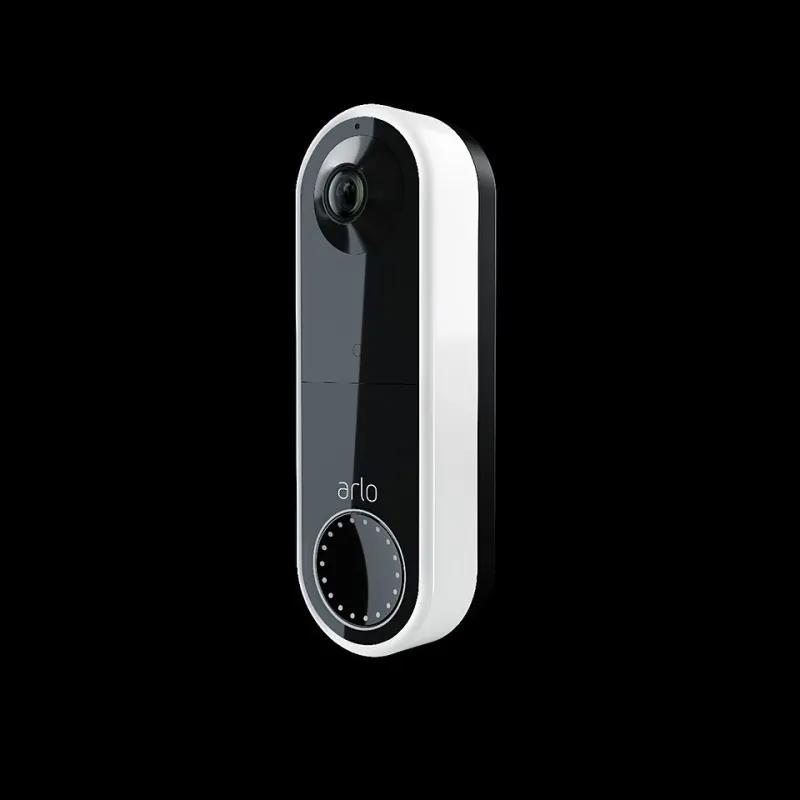
Photo: SalariéVerisure, CC BY-SA 4.0, via Wikimedia Commons
The video doorbell has become as standard an American porch fixture as the mailbox. Roughly a third of U.S. households now own some form of smart home camera, and the devices are marketed on a simple promise: you never have to wonder who is at the door. What the advertising omits is the second transaction taking place — the one between the homeowner and the company behind the lens.
A doorbell camera is not merely a recorder. It is a connected endpoint that uploads video, audio, motion metadata, and device diagnostics to cloud infrastructure owned by a corporation, governed by a terms-of-service document most buyers never open. Understanding that document is the first step toward deciding what your front door is actually saying about you.
What You Are Really Agreeing To
The agreements governing the major doorbell ecosystems share a common architecture. Users grant the company a broad license to store, process, and — in certain configurations — use the content they capture. That license typically covers infrastructure functions such as storage and streaming, but it can extend to product improvement, analytics, and, in some policies, the development of machine-learning features like person detection and package recognition.
Three provisions deserve particular attention:
- Retention windows. Many services store cloud clips for a fixed period — often 30 to 60 days on paid plans — before deletion. Free tiers may retain footage for only hours. The practical effect is that a stranger's visit, a heated argument on the sidewalk, or a child's walk to school can live on corporate servers for weeks.
- Audio capture. Doorbells record sound as well as image, and audio can implicate conversations well beyond your property line. Several U.S. states have wiretapping or all-party-consent statutes that make recording private conversations legally fraught — a compliance question the device does not resolve for you.
- Shared footage rights. When a user exports a clip and posts it to a neighborhood app or social platform, the original policy's protections largely fall away. The video becomes subject to the terms of whichever platform receives it.
The Neighborhood App Ecosystem
The most consequential data pathway is not the camera itself but the social layer built around it. Major doorbell manufacturers operate companion apps that blend private alerts with a public-ish feed of user-submitted clips, and several have historically integrated with local law-enforcement through formal partnership programs.
Under those programs, police departments could request footage through a law-enforcement portal, and in some cases users received a government-request notification asking them to voluntarily share a clip tied to a specific time and location. Civil-liberties organizations, including the ACLU and the Electronic Frontier Foundation, have argued that this arrangement effectively knits thousands of private cameras into a distributed surveillance network without any municipal procurement process or public debate.
The landscape has shifted. At least one major manufacturer ended its formal police-request program in 2024, and several municipalities have imposed restrictions or moratoriums on such partnerships. But the underlying mechanics remain: any clip a homeowner voluntarily posts can be screenshotted, forwarded, subpoenaed from the platform that hosts it, or simply circulated far beyond the block where it was recorded.
What the Camera Sees Beyond Your Property
A doorbell pointed at a porch inevitably captures the sidewalk, the street, and the neighbors' comings and goings. Footage routinely includes license plates, children's routines, delivery workers' faces, and the schedules of anyone who passes at a regular hour. In dense neighborhoods, a single street can generate overlapping fields of view from a dozen devices, producing a level of ambient coverage that no individual homeowner intended.
This raises questions that extend past personal privacy into community norms. Courts have generally treated what is visible from a public street as fair game, but the aggregation of that visibility — searchable, timestamped, and cloud-stored — is a genuinely new condition, and the law has not fully caught up.
Adjusting Without Unplugging
For owners who want the security benefits without the maximum data exposure, several practical steps go a long way:
- Audit sharing settings first. Disable automatic posting to neighborhood feeds, turn off any option that lets authorities contact you through the app, and review third-party integrations you may have authorized and forgotten.
- Shrink the retention window. If your plan allows custom clip lifetimes, choose the shortest workable period. Footage that does not exist cannot be requested, leaked, or misused.
- Angle the lens deliberately. Aim the camera at your own property rather than the street. A slight tilt down can exclude most sidewalk and road activity while keeping the porch covered.
- Reconsider audio. Where state law requires all-party consent, muting audio recording removes a meaningful legal and ethical exposure.
- Use local storage where possible. Some ecosystems and third-party alternatives support recording to a hub or memory card, keeping footage inside the home rather than in a corporate cloud.
- Enable the strongest account protections available. Two-factor authentication and a unique password matter here as much as anywhere — a compromised camera account hands an intruder a live feed of your household.
Security at What Price
None of this argues that doorbell cameras are inherently bad. They have deterred package theft, documented genuine crimes, and reunited families with lost pets. The concern is asymmetry: buyers are asked to make a consequential privacy decision at checkout, in a document designed for skimming, about data flows that only become visible after an incident.
A front door camera can be a legitimate tool. Whether it is also a data endpoint feeding partnerships you never chose is largely determined by settings most users never open. Reading those settings — not just the box — is the difference between owning a camera and being enrolled in a network.